Thursday, May 23, 2013

My Favorite T-shirt Refashion at The Girl Creative

T-shirt Refashion into toddler dress

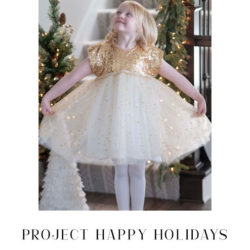
Everyone has their favorite t-shirt right?  Don't you hate it when you get a stain on that shirt, or it just doesn't fit properly anymore?  Today I'm sharing a simple tutorial at The Girl Creative to save your favorite tee and transform it into a light and breezy dress for the favored little girl in your life.


Photobucket

Pin It

Follow on Bloglovin

Lost Arts of Sewing: Vintage-Style Embellished Blanket by StraightGrain


I'm sure you've all found those blogs that sort of keep nudging your subconscious - you notice cute things and great pictures popping up in link parties, sew alongs, etc.  Then you start finding your favorite blogs contributing to really cool series and think "I have got to go check this girl out!".  That's how I found An from StraightGrain.  It began with this adorable dress, I think in a linky party with a catchy caption about how much her daughter loved the circle skirt on this dress:


She's hosting the epic Kid's Clothes Belgian Style featuring a laundry list of awesome contributors.  An lives in Antwerp, a city I became very familiar with; living there for five weeks on a short-term work assignment.  Such a cool city!

Belgium is a center for the lace industry, so I'll share a bit about Belgian lace:
The intricate lace patterns in Belgium are unmatched in any other country. The lace trade rose during the early Renaissance. Emperor Charles V decreed that lace-making should be a compulsory skill for girls in convents and beguinages (similar to a convent except that the women dedicated themselves to God without retiring from the world) throughout Flanders. Lace became fashionable on collars and cuffs for both sexes. Trade reached a peak in the 18th century.  Lace makers are traditionally women. Hundreds of craftswomen still work in Bruges and Brussels, centers of bobbin lace, creating intricate work by hand, often using over 100 threads per bobbin. Belgian lace is bought today mainly as a souvenir, but despite the rise in machine-made lace from other countries, the quality here still remains as fine as it was in the renaissance.

Source:

Here's An:

Hi everyone! I'm An from StraightGrain, and I'm so happy to be partipating in Jenn's inspiring series. When Jenn invited me, I almost immediately thought of my grandmother and aunts, who are very skilled needleworkers. One of the many things they (used to) do, is embellishing bed sheets with embroidery, cutwork, or crocheted strips. Now, with a kid and a job and a very time-consuming hobby, the idea of doing something of that order wasn't really realistic for me, but I did take inspiration from their work for the blanket I'm showing today.

_IMG_3652
 
A few weeks ago, I bought a lovely piece of Nani Iro brushed cotton here (Fuwari Fuwari in cream, out of print), and I decided to turn it into a vintage-style blanket by embellishing the edges with piping and store-bought cutwork. Here is how I did this:

_mini tuto2 

1. First, I made the piping, as I couldn't find ready-made piping in the right color. 2. Next, I stitched both the cutwork strip and the piping on the right side of the bottom sheet. 3. At the (rounded) corners, I clipped the piping before stitching it to the fabric. 4. Then, I placed the bottom sheet on the top sheet, right sides together, and stitched right into the stitch line of the piping. I left a turning hole of about 15 cm (6"). 5. Finally, I turned the right side out, and closed the turning hole.

 _IMG_3645

This is the first time I use cutwork, but I'm pretty sure I'll use it again. It's extremely simple to work with, and it gives the blanket a bit of a vintage touch. Thank you so much for having me, Jenn!

Thanks so much for contributing this great project An - I love that you were able to make something that looks so lovely and vintage, but is still very approachable.

Photobucket
Follow on Bloglovin

Wednesday, May 22, 2013

Lost Arts of Sewing: Chain Stitch Embroidery from Welcome to the Mouse House


Today we have Hayley from Welcome to the Mouse House with us.  I fell in love with Hayley's sweet designs with lovely hand embellishments on her adorable kids when she competed on (and won!) Project Run & Play Season 5.  Her Beaute Classique winning look was just. so. stinkin'. cute!


Now for a little history on chain stitch:  It is an ancient embroidery technique; surviving examplesof chain stitch embroidery crafted in silk thread have been dated to the Warring States period, or 5th-3rd century BC.  Hand sewn chain stitch embroidery can be worked through only one layer of fabric, which makes it a perfect surface embroidery style and lends itself to embellishment near seams on finished fabric.  Since chain stitches can follow curved lines, they can be used to "draw" in thread.

Source: 

Now on to the good stuff - here's Hayley with a perfect example of chain stitch embellishment.


Hey guys!  I am super happy to be over here today!  My name is Hayley and I blog over at Welcome to the Mouse House, where I post about sewing and craft projects, recipes, family life, and decorating my home.  When Jenn asked me to be a part of this series, I knew immediately that I would share my love of hand embroidery.  Hand embroidery is one of my favorite ways to embellish clothing and home decor because it makes it extra special.   

Today, I am going to show you how to do the chain stitch I used for my daughter's new shirt, so grab your supplies and sew along with me:)


Before I begin, I just wanted to share a few examples of hand embroidery projects I have worked on over the past year:

If you have never hand embroidered, you should really give it a try.  It might seem intimidating, but it really is simple and so rewarding.  

An easy stitch to start with would be a backstitch.  A few months ago, I created a tutorial for a basic backstitch over at Sew Mama Sew, which is a great beginner stitch and you can read the full tutorial by clicking HERE.


Okay, let's get started on the chain stitch now!
(I will share how to do the balloon another day:)


You will need:

*embroidery hoop
*embroidery thread ( I use 2-3 strands)
*scissors
*water soluble fabric marker
*fabric that you want to embroider

 Here is a basic chart for how to make a chain stitch, but I will also describe it in detail below.


Please excuse my chippy fingernail polish… it appears that I am a bit rough on my hands :)


Get your hoop, fabric, needle, thread, and scissors.

Trace out the words/picture that you want to stitch with your water soluble fabric marker

Thread your needle with 2-3 strands, tie the end into a knot.

Bring your needle up through the bottom of the fabric and pull all the way through (it will stop because of the knot you made)

Now, go back down through the same hole you just came up through.

But don't pull all the way through.  Stop when you have created a loop.

Bring your needle up through the fabric again… about a 1/2 inch away from your loop.  

Lay the loop down and bring your thread up through it.

Tug the thread and you have now created your first chain!

Repeat this process.  Go back down through the hole you just came up through, create a loop, come up through the fabric, thread through the loop and tug.

When you are ready to finish your chains, simply go past your last loop and go down through the fabric and knot.  This will secure your last loop to the fabric.

Chain Stitch!

My daughter's shirt went from cute

To super duper cute!

And she absolutely loves it
and that is what truly matters

I hope this helps you learn some new techniques.  I would love for you to stop by my Facebook Page or Blog to say hi! 
Thanks so much for participating in this series, Hayley!  And your chain stitch embellished outfit is indeed super duper cute!

Photobucket
Pin It
Follow on Bloglovin

Tuesday, May 21, 2013

Lost Arts of Sewing: Blanket Stitch for Garments by Falafel and the Bee


Today we welcome Michelle from Falafel and the Bee who is the first guest for the series.  She's sharing a blanket stitch embroidery technique for a finishing touch on garments.  I became smitten with Michelle's whimsical contributions as she sewed along with Project Run & Play, particularly her Art Inspired Dress which she based on a Norman Rockwell painting and recreated with her stunning photo shoot.  

normanCollageM

Loveliness, pure loveliness.

Now for a little history of the technique Michelle is sharing:  A blanket stitch is a decorative and functional stitch traditionally used to finish an unhemmed blanket.  The stitch is two-sided meaning it can be seen on both sides of the blanket.  It can also be used to applique a design for embellishment.  The first publication of the term "blanket stitch" was in L. Higgin's 1880 Handbook of Embroidery manual, in which he described it as an edging for tablecloths or similar items.  It's similar to a buttonhole stitch, but is usually worked in larger stitches and with heavier yarn or thread, such as embroidery thread or waxed cotton.

Sources: 

So without further delay, here's Michelle:

I was so thrilled when Jenn asked me to be a part of this series!

Then the panic set in.

I am not a strong hand-sewer. Truth be told, I avoid it at all costs. But then I started to think about all the work I admire and realized what made them all special was the little extra hand-sewn goodness added by the person, usually to show how very much they care.

So, if you are like me, come and start at the beginning. We'll do it slow and take baby steps, together.
Today I am demonstrating the "Blanket Stitch" on a fleece pullover that I made (see tutorial here).

Gather:

::some embroidery thread::
::a large needle::
::a garment that needs a little detailing::

Step 1:
step1m
Do not knot the thread, and pull it through from the inside out.

Step 2:
step2m
Hold the garment with the right side facing you. Take the needle and insert it to the Left of the first stitch. Make sure to leave a little loop.

Step 3:
step3m
Put the needle through (from the back, going away from you) the loop.

Step 4:
step4m
Repeat.

step5m
And Again.

Step 5:
step6m
When you reach the place you started, put the needle through the first vertical stitch. Knot in the back. Cut the hanging thread, and you're done!

Step 6:
finishm
Do it to the sleeves!

Step 7:
finishsmilem
Place on sassy child and admire your hard work!

I hope you enjoyed that little tutorial. I know this has inspired me to step out of my comfort zone, and try something new. And you know what?
I like it!

Thanks, Jenn, for including me in this fantastic series.

Thank you Michelle, for sharing your learning experience with us.  I love trying new things and I am so glad this series prompted you to take a nice giant step into hand sewing and embroidery!

Monday, May 20, 2013

Lost Arts of Sewing: Vintage Style Embroidered Pillowcase by A Jennuine Life


Welcome folks!  I'm kicking off the series today with my version of a project that started this whole idea whirring in my head:


I posted about this embroidered pillowcase my Mom had given me from my Grannie's linen closet after she passed away.  At the time I wrote about it I asked "Does anybody actually hand embroider borders on pillowcases anymore?"  Our grandmothers and perhaps our mothers used to do things like this on a regular basis.  Now, many of my friends have never used a sewing machine outside of 7th grade Home Economics class.  

That thought stewed for almost two years until I decided to kick off this series to find out if these talents are lost, or merely just a bit more uncommon.  I think you'll find from the great lineup of guests sharing their "lost arts" that they are, in fact, not lost!

As part of the series, I'll be sharing a little history or fun facts about the style being shared.  This particular style of embroidery has be stumped - it's a combination of hand work on a foundation of machine stitches.  I googled my fingers off and asked around to my friends who are true artisans of embroidery to no avail.  I think it's a simplified form of surface embroidery.  My Grannie did a lot of chicken scratch embroidery and I have two large quilts from her so I'll talk a little about that similarly simple style:  

Chicken scratch is an easy type of embroidery typically worked on gingham which gives the impression of applique'd lace.  The origin of the style is unknown, but it dates to early America.  Early settlers traveled across the sea and land to settle into their new homes and the craft came with them.  It's known by different names: Amish embroidery, cross-stitch on gingham, depression lace, gingham lace, gingham tracks, lace stitch, and snowflake embroidery.


Source:

Here goes my take on Grannies' vintage style embroidered pillowcase:


I have two pillowcases from Grannie in this style and I use them for Arden's bed.  Even though they're vintage, I would rather use them and risk stains than have them sit untouched and pristine in my linen closet.


I began by inspecting the pillowcases from Grannie.  I can see that she used pearl cotton instead of multi-strand divisible embroidery floss.  The pattern is worked on the surface of the pillowcase, using two parallel lines of machine stitching in a manner I find similar to couching, only sort of reversed as in couching you lay a yarn on top of the work and tack it in place with small stitches through the piece.


I pulled out a plain white pillowcase and ran an additional line of stitching parallel to the factory stitches.  Unfortunately, I wasn't able to match the stitch length since I did this in a hurry, and my line has much shorter stitches than the other.  This might have worked to my advantage as I very likely wouldn't have been able to match exactly and keep them in sync, so this way I could choose from among which stitches to pick for one side to best match the other.


From there it was a simple matter of working a zig-zagging stitch with each point bridging two machine stitches.  I tried my best to keep the stitches even and they're not, but isn't that part of the charm of handwork?  After once around the case, I ran a second zig-zag intersecting the first creating the x-stitch pattern from my Grannie's pillowcase.


All done!  Not too shabby from this angle.  This did not take that much time to complete - maybe three hours' work in total.


I think mine will get knitted together more like Grannie's after a couple of trips through the washer and dryer.  Now I'm off to embellish some more pillowcases or even a skirt hem or two - won't you give it a try?

Photobucket

Pin It

Follow on Bloglovin
Related Posts Plugin for WordPress, Blogger...